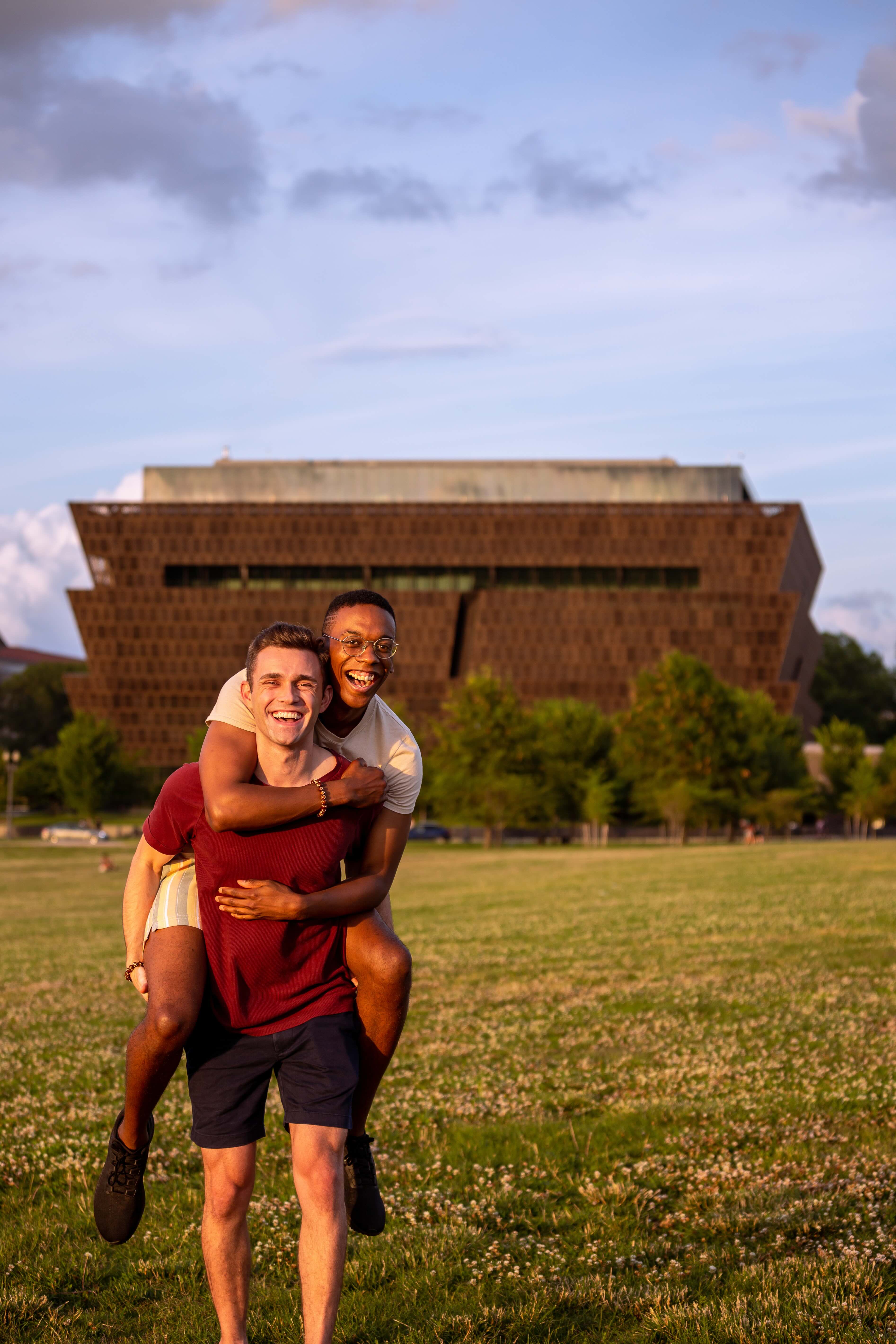
On the occasion of my thirtieth birthday today, I want to take the opportunity to articulate why it feels like a big deal to me, and why I’m unashamedly celebrating my life and inviting others to as well.
First, none of us knows how long we’re going to live, so I think we should celebrate our lives every chance we get—especially on our birthdays, and especially in the big milestone years.
Secondly, we tend to save the earnest “celebration of life” kind of ceremonies for when people die, and I think we should do much more of this—saying the heartfelt things about each other—when people are still living.
But the main reason turning thirty feels like such an important milestone in my life is simply (and soberly) because I’ve considered the alternative. Since high school, and especially since college, I have been beset by persistent, episodic feelings of depression, futility, hopelessness, and despair that have caused me to seriously question why I should go on in life rather than just giving up. While I haven’t ever been suicidal (by which I mean I’ve never made a plan or taken steps to end my life), I have spiraled plenty of times into what feels like a hopeless and debilitating pit of these emotions, despite my best efforts. Most often I have been rescued by friends, who remind me I am loved and dear to them, and in doing so remind me just how worthwhile it is to continue living my life. Plenty of times they haven’t even realized they were doing this.
I’m prone to these emotions in part because of my admitted propensity toward melancholy, but I think more truly because while I’ve enjoyed some extraordinary advantages in my life owing to little more than the bed into which I was born, in other ways I think I’ve been dealt a pretty challenging hand in this thing called life.
For starters, I grew up as a twin, and then in college I had the unique and strange experience of at some level becoming not-a-twin. That is, because Paul and I went to different universities, at 18, for the first time in my life, I had to learn what it meant to not always have someone alongside me for nearly every experience of my life. I spent most of college learning how to adapt to this and trying to make close friends (or just avoiding it), all the while comparing the possible depth of those friendships with the 18-year-long relationship I had with my twin.
At the same time as this, I was discovering that I’m bisexual, which, in addition to sparking an under-the-radar spiritual crisis, immediately complicated my desire to cultivate deep friendships with other men. The combination of our hyper-sexualized culture and Christian purity culture had already instilled in me that male-female friendships are fraught because they’re always bound to become romantic, and I more or less applied that same logic to same-sex friendships. But realizing that this would leave me with no options for close friendships, I had to admit the faultiness of those arguments and instead figure out how to cultivate close friendships with both men and women without falling in love with them or wanting to sleep with them—if that was possible. And I’ve largely had to do that on my own, and largely through trial and error and learning along the way. All the while, I’ve also had to navigate the biphobia that causes many people to misunderstand, malign, or ignore my bisexuality and its uniqueness as an experience (often unwittingly, and as I shared about at length in my talk at the Revoice conference this summer).
As my initial spiritual crisis gave way to a slow reconciliation of my sexuality and my faith, I accepted that while I wouldn’t pursue romantic partnership with a man, pursuing romantic partnership with a woman was still on the table. But before long, I began feeling a distinct, durable, and compelling invitation from God to practice intentional singleness, or celibacy, for a period of time. This was despite a deep longing I had to be partnered with someone, which owed itself in large part, I think, to the intimacy and life partnership I enjoyed and grew accustomed to in my first 18 years of life as a twin—the closest analog to marriage I can think of. And this longing for partnership had only grown after that.
The conflict between this mysterious yet compelling invitation to celibacy, my deep longing for intimacy in partnership, and the intersection of my bisexuality with both has perhaps been the story of my twenties (or one of several), and I have struggled with it all considerably, as many of those close to me know. Celibacy is a difficult call, for those called to it. (Marriage, too, is a difficult call, for those called to it.) Cultivating deep friendships is hard enough without the added baggage of needing to determine whether my attraction to any person—man or woman—is platonic, romantic, or some combination of the two. And as I’ve pursued the deepest intimacy available to me as a celibate person—close friendships—I’ve not only had to navigate attraction many times, but also manage my own outsized expectations for intimacy. I’ve had to be careful not to put all of my hopes and longings for partnership and the kind of intimacy it offers onto my friendships, which aren’t the same kind of relationship and aren’t able to hold the relational intimacy supported by a covenanted, lifelong union between two people.
On top of all this, I am a sensitive and deeply emotional man, so I feel all my emotions about these things very strongly, and that in a culture where being an emotional man is (still) so often misunderstood, viewed as weak, and ridiculed. And if that weren’t enough, my chronic health condition—vitiligo—has given me literally sensitive skin and has further complicated my already challenging relationship with my own body and embodiment. Both of these things can make it feel like the broader environments I inhabit are inhospitable to me, whether on account of hypermasculinity on the one hand or the relentless Texas sun on the other.
So here I am: a sensitive, bisexual man with a deep capacity for intimacy, the kind most readily found in marriage, for whom marriage is still a possibility within his sexual ethic, yet who feels called to celibacy and thus constrained to close friendship as a source of deep intimacy—yet who is hampered in cultivating close friendships by a sexual orientation that allows for the possibility of romantic affection toward men or women. Quite the conundrum.
Taken all together, it feels like a hard hand to be dealt, one that has brought with it a considerable amount of grief, disappointment, frustration, and heartache in perpetuity, which is why I’ve battled with these persistent feelings of depression, futility, hopelessness, and despair. Because as I’ve navigated all these challenges of intimacy, longing, belonging, and embodiment in my friendships, my sexuality, and my celibacy, I’ve had numerous friendships that have looked promising or even become close but which ultimately ended, either on account of one or both of us having insurmountable romantic or sexual feelings for the other, or because we had different desired levels of friendship and closeness, or for one of the many other reasons friendships don’t work out. In any case, cultivating intimate relationships has been particularly complicated for me for many years now.
There are, however, notable exceptions to this—friendships which have proven to be not just possible, durable, and intimate, but also one of the greatest joys and gifts of my life to date. The companionship, love, and support of these friends are a key reason I’ve even made it to thirty. They have lifted and buoyed me countless times when I’ve needed it, they’ve shared the load of heavy burdens I’ve had no choice but to accept in life, and they’ve held me in their thoughts, their hearts, their prayers, and their arms when I’ve needed each of them. These friends have made my life possible. And more than that, they have made my life the gift and the joy that it is, even amidst all the hardships. Because although my life—the combination of who I am as a person, the experiences I’ve had, and the call of God I feel on my life—has often been and continues to be hard, it has also been deeply good and full of extravagant beauty and love. And I cannot celebrate my thirtieth birthday—and with it that very life—without celebrating my friends’ irreplaceable place in it, their fingerprints on it, and the ways their love and their very personhood have become entangled with mine.
That is why I want to celebrate. To celebrate my birthday is to defy the despair and despondency that would paralyze me; to attest to the goodness and beauty and worth of this life that is mine to live; and to rejoice in the self I am becoming with God’s help and with unending thanks to each of my friends.
P.S. In writing this piece, I don’t mean to throw a pity party for myself; life is hard, and so many people’s lives are orders of magnitude harder than mine (and anyway, it’s not a competition!). Many of you reading this could surely write a similar piece (if not a book) about the challenges of being you in this world and in this life. This is my own, written for my thirtieth birthday in an effort to articulate why it feels so important to me, and written as much for my own sake as for anyone else’s. If you’ve read it through to the end here, I sincerely thank you.